Emerson Del Ponte
Professor | Plant Pathology | Epidemiology
Universidade Federal de
Viçosa
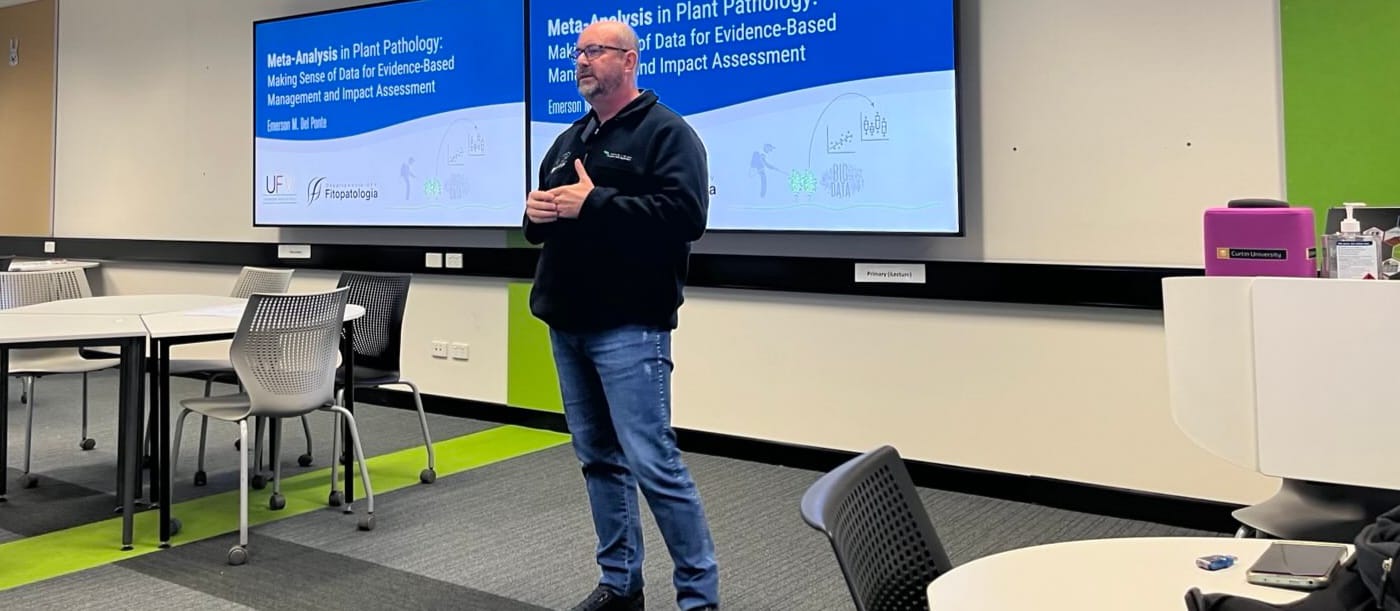
I am a Full Professor of Plant Pathology at the Universidade Federal de Viçosa (UFV), Brazil, working on quantitative plant disease epidemiology. I hold a DSc in Plant Pathology from Universidade Federal de Pelotas (2004), with a one-year visit to the Bergstrom Lab at Cornell University, followed by a postdoc on disease risk assessment and prediction at the Yang Lab, Iowa State University. From 2006 to 2014 I was an assistant professor at the Federal University of Rio Grande do Sul (UFRGS). At UFV I teach graduate courses and mentor MSc and PhD students. I am Editor-in-Chief of Tropical Plant Pathology and Senior Editor of Phytopathology, and I am frequently invited to evaluate theses and faculty promotions worldwide.
Appointments, editorial service, mentoring, talks and the complete publication list are in my CV. Publications can also be found on ORCID, Google Scholar, ResearchGate and Lattes.
I strongly advocate for an open and reproducible research model and culture that may ultimately contribute to a more accessible, transparent and reliable science. This led me to co-found Open Plant Pathology initiative together with Adam Sparks. In my Lab, we make use of R language for all statistical and data science related activities. All data and computational codes produced during our research are made available ahead of peer-review. You can find our code on GitHub. The research outcomes are organized and shared as a research compendium and preprints of manuscripts are now archived in the CABI AgriRxiv preprint server.
Slides of some of my talks are hosted in my Speakerdeck account and full videos of talks and lectures can be found on my YouTube channel.
 This portrait photo is available for use in promotional materials related to seminars,
keynote talks, media appearances, or institutional profiles. Feel free to download and
use it whenever a high-quality professional headshot is required for event programming
or press releases.
This portrait photo is available for use in promotional materials related to seminars,
keynote talks, media appearances, or institutional profiles. Feel free to download and
use it whenever a high-quality professional headshot is required for event programming
or press releases.
We utilize statistical and mathematical models and conduct field, greenhouse, and laboratory experiments to measure, understand, compare, and predict plant disease epidemics. In addition, we integrate remote sensing and computer vision approaches to improve disease detection, quantification, and monitoring across scales, from individual plants to field and landscape levels.
Our modeling work is not confined to specific diseases and encompasses a broad spectrum of topics in plant disease epidemiology. This includes the assessment of disease intensity and crop loss, modeling temporal progress and spatial spread at multiple scales, evaluating and predicting disease risk, and conducting systematic reviews and meta-analyses. Increasingly, we combine epidemiological modeling with image-based phenotyping and geospatial data to strengthen inference and decision support.
Our experimental research primarily focuses on the genotyping and phenotyping of fungal pathogen populations. We evaluate traits such as reproduction, pathogenicity, aggressiveness, toxigenic potential, and fungicide resistance. Currently, we investigate two globally important plant pathogens: mycotoxigenic Fusarium species causing head blight and ear rot in winter and summer crops, and Pyricularia spp. responsible for blast diseases of rice, wheat, and grasses.
Bianca Moreira Barbosa (PhD in Chemistry)
Marston Franceschini
Matt
Combes
Ricardo Gomes Tomáz (D)
Monalisa C. De Cól (D)
Marcelo
Henrique Oliveira Gonçalves (D)
Ana Carolyne C. de Carvalho (D)
Mary Paz Romero-Benavides (D)
Igor Fernandes Erhardt (M)
Enzo Agustin Pedraza (M)
Juan Pablo Ruiz Rugeles (M)
Mary Paz Romero Benavides (M)
Lila Soares
Lima (M)
Kaique dos Santos Alves (M,
D)
Jhonatan Paulo Barro
(M, D)
Gustavo B. dos Santos (M)
Ignácio Cazón (D)
João Paulo Ascari
(D)
Sheila M. P. Andrade
(M)
Maíra R. Duffeck (M,
D)
Franklin J. Machado (M, D)
Caroline F. Ávila (M)
Paulo R. Kuhnem (D)
Larissa B. Gomes (M)
Camila P. Nicolli (M)
Leilane S. D'Ávila (M)
Felipe Dalla
Lana (M)
André A. Schwanck (M)
Raquel Stumpf (M)
Paula Astolfi (M)
Piérri Spolti (M, D)
Ana Paula de Souza Lima
Evandro Puhl de Melo
Tiago de Sá Cardoso
Marlon Michel A. Moreira Neto
Ana Paula Vicenzi
Leonardo H. M. do Carmo
Leonardo M. Antonello
Karine da Costa M. Gonçalves
Camila P. Nicolli (M)
Gláucia Moreira (UFV)
Lucas Abreu (UFV)
Juliano dos Santos
(UFRGS, 2009-10)
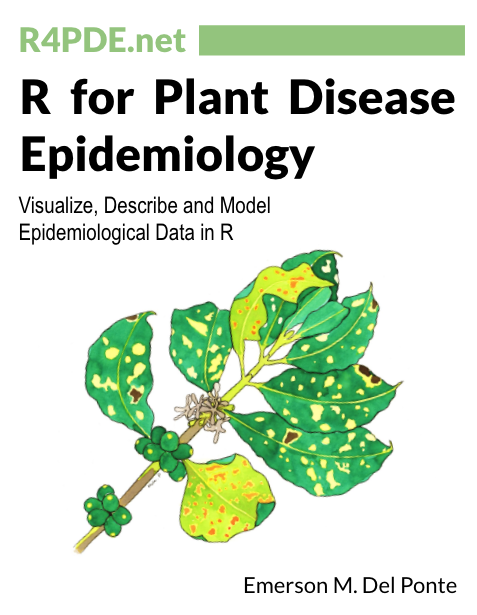 R4PDE is
a dynamic
online book rooted on the teaching notes of my graduate course, FIP 602 - Plant
Disease Epidemiology, which is offered every year for students in the Graduate Program in Plant
Pathology of the Universidade Federal de Viçosa. This book provides
context and showcases various methods for describing, visualizing and analyzing
epidemic data collected over time and/or space using R.
R4PDE is
a dynamic
online book rooted on the teaching notes of my graduate course, FIP 602 - Plant
Disease Epidemiology, which is offered every year for students in the Graduate Program in Plant
Pathology of the Universidade Federal de Viçosa. This book provides
context and showcases various methods for describing, visualizing and analyzing
epidemic data collected over time and/or space using R.
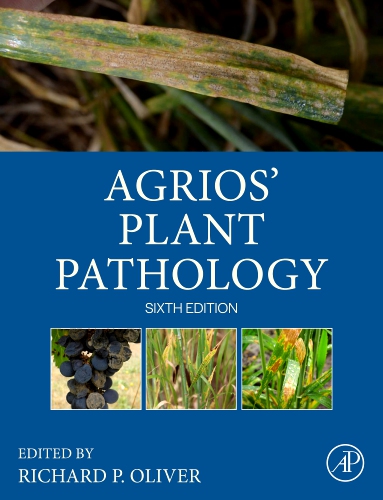 The 6th edition of Agrios' Plant Pathology (2024) is the
long-awaited update to the quintessential reference in the field. Restructured for a
new generation of scientists, this edition features contributions from
world-renowned experts. I had the privilege to serve as one of the
co-editors for this edition and I am the author of three
chapters specifically focused on Plant Disease Epidemiology, including
epidemic modeling, disease progress analysis, and warning systems.
The 6th edition of Agrios' Plant Pathology (2024) is the
long-awaited update to the quintessential reference in the field. Restructured for a
new generation of scientists, this edition features contributions from
world-renowned experts. I had the privilege to serve as one of the
co-editors for this edition and I am the author of three
chapters specifically focused on Plant Disease Epidemiology, including
epidemic modeling, disease progress analysis, and warning systems.
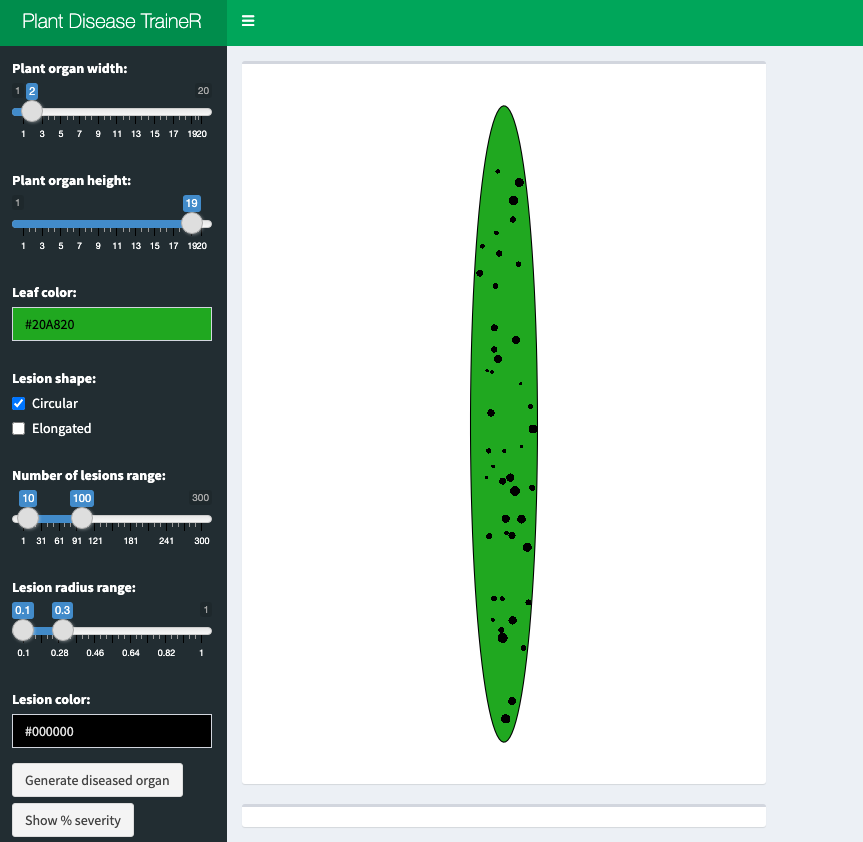
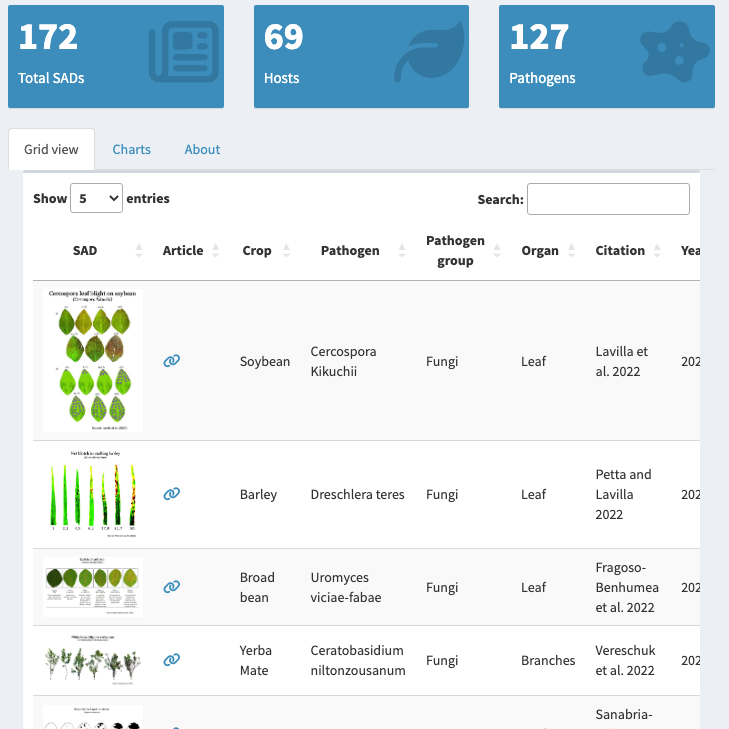
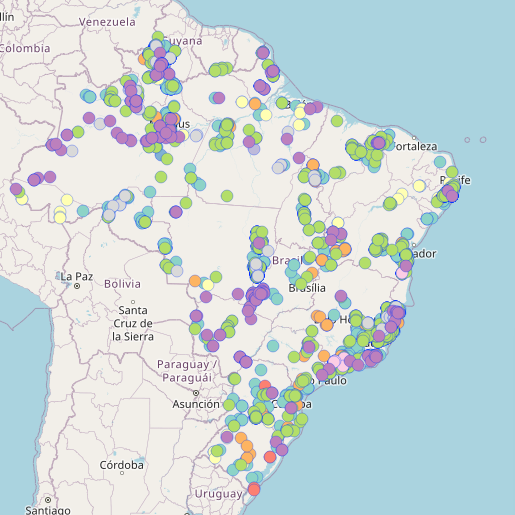
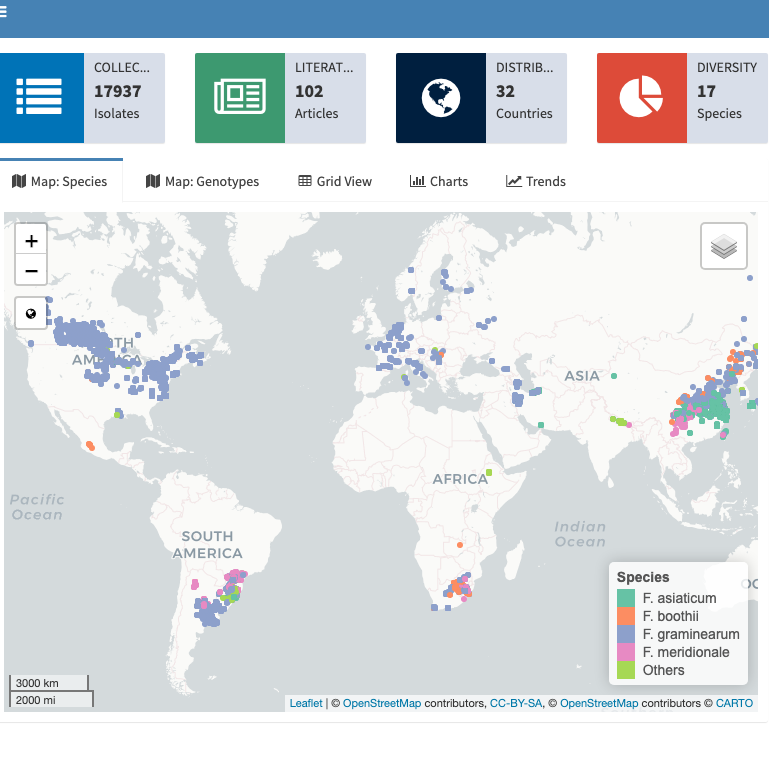
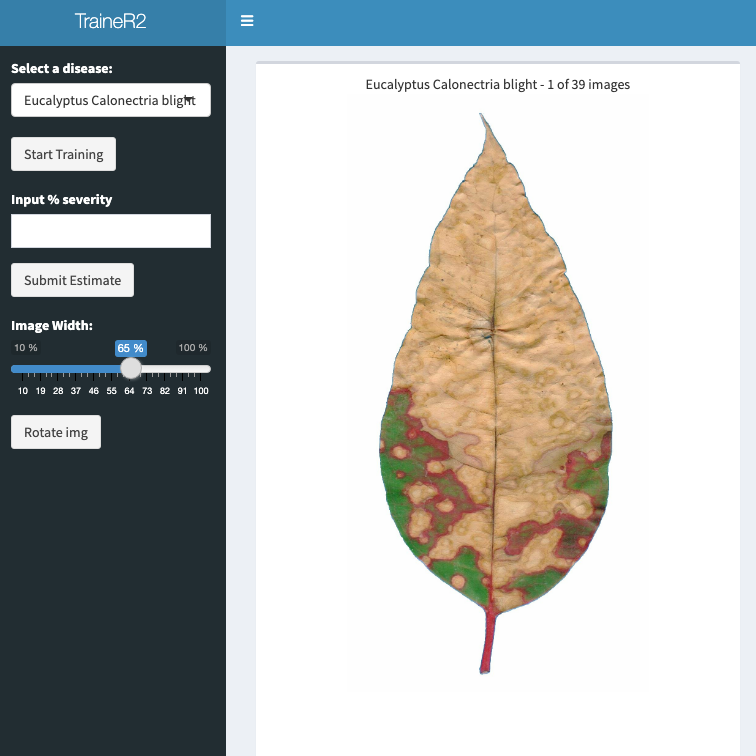
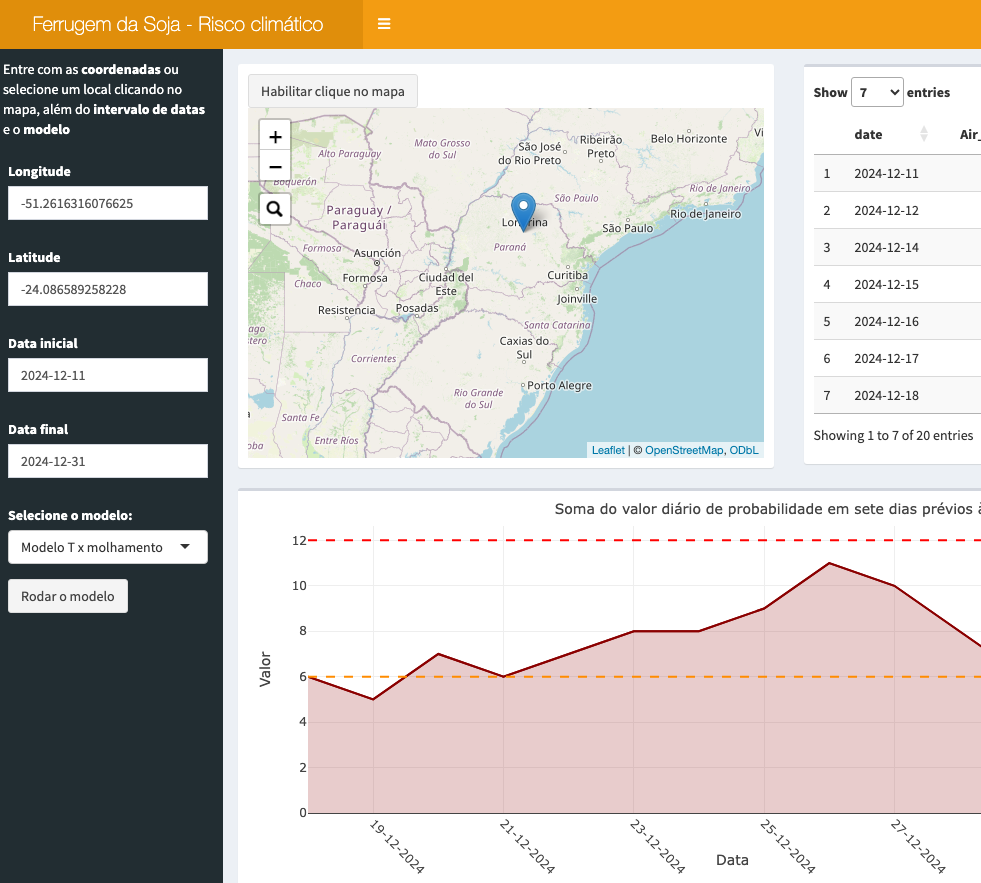
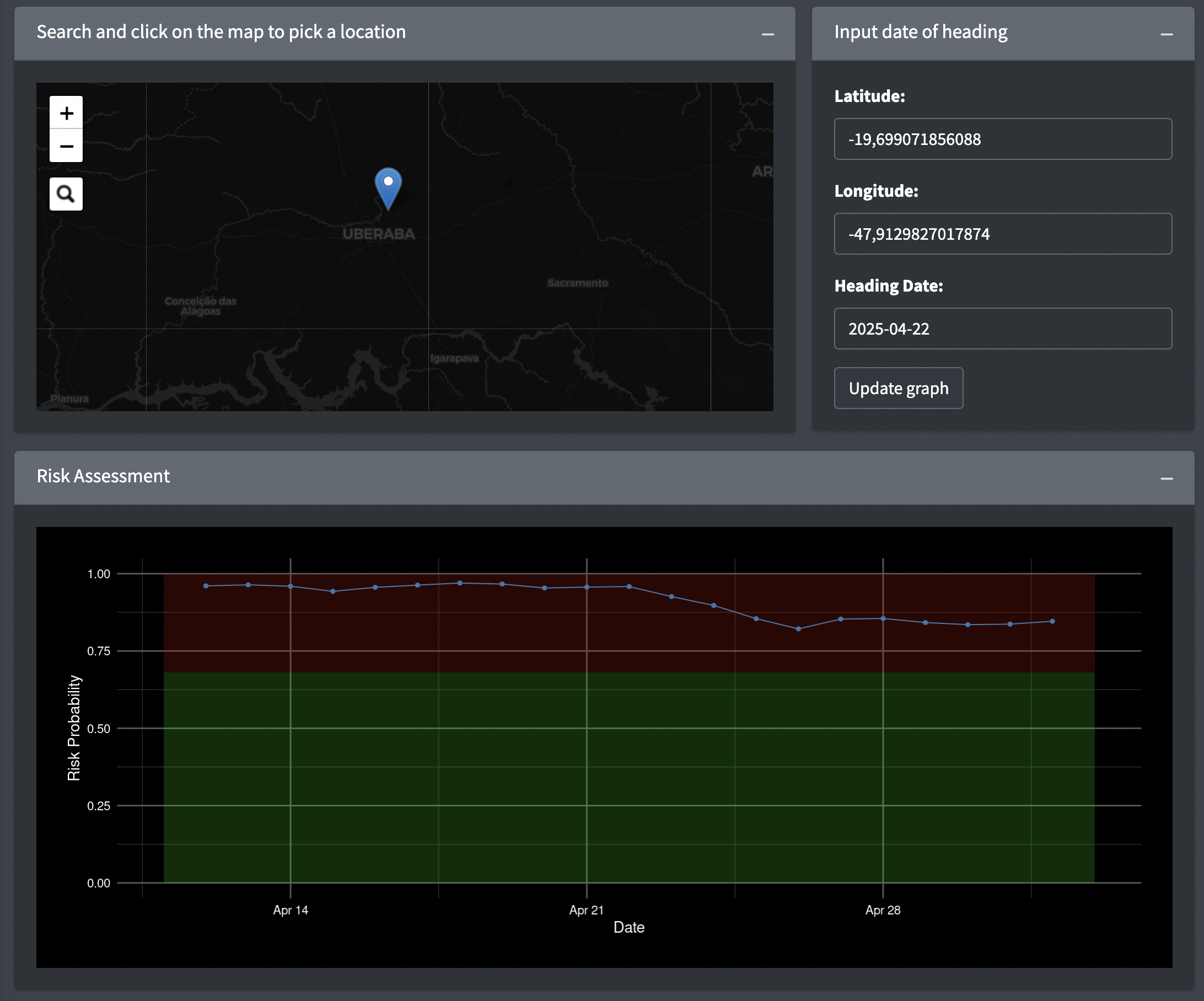
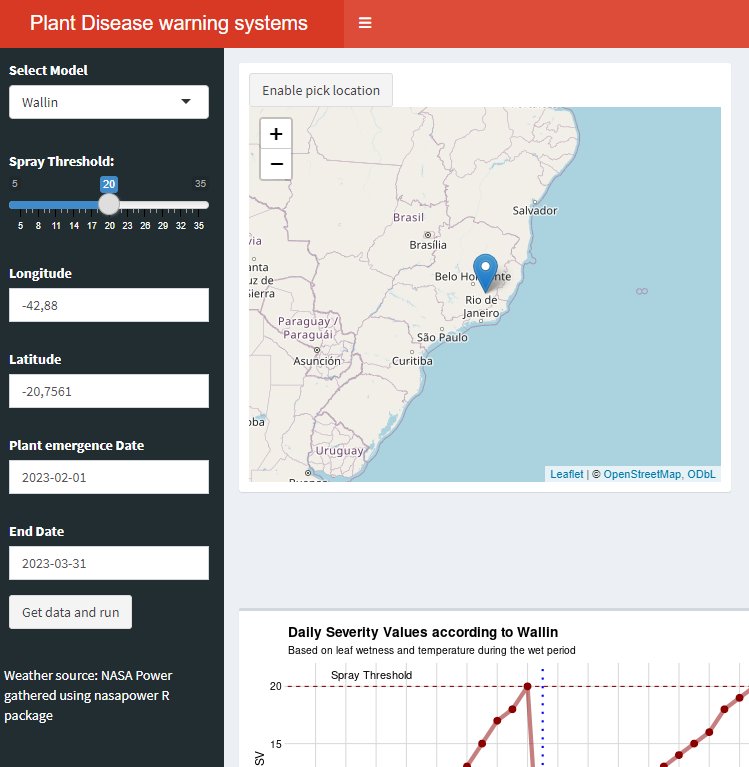
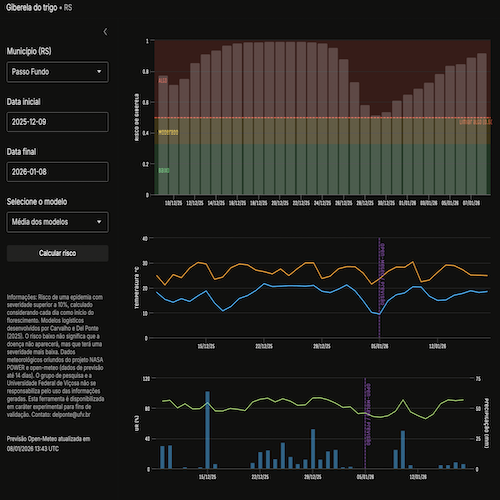
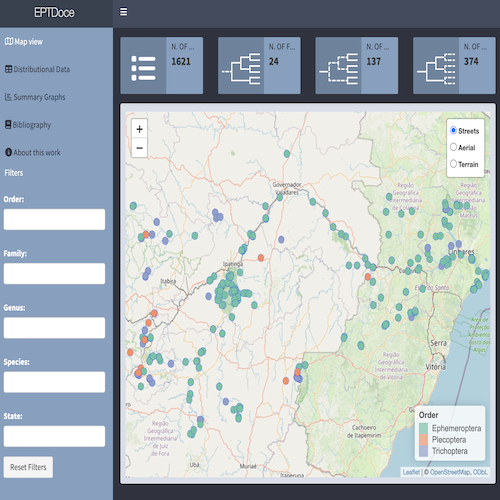
I have developed, myself or in collaboration with students, web applications to support research and teaching. These are made with R + Shiny.
Loading CV…