Book
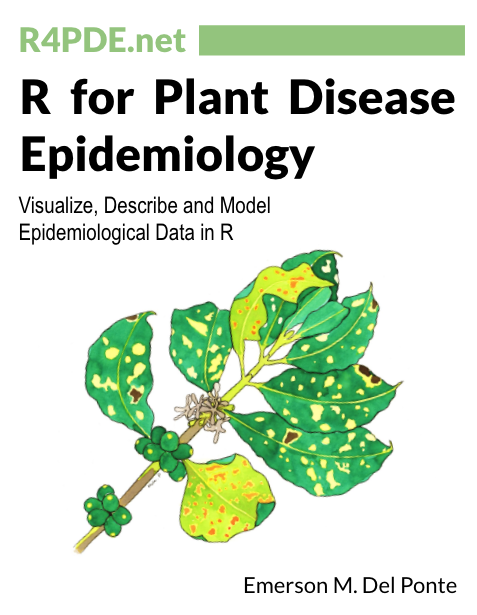
R for Plant Disease Epidemiology (R4PDE)
R for Plant Disease Epidemiology (R4PDE) is a dynamic online book rooted on the teaching notes of my graduate course, FIP 602 - Plant Disease Epidemiology, which is offered every year for students in the Graduate Program in Plant Pathology of the Universidade Federal de Viçosa. This book is for those interested in studying and modelling plant disease epidemics using R. It provides context and showcases various methods for describing, visualizing and analyzing epidemic data collected over time and/or space. Users should have have a foundational knowledge of R to run the examples.
Apps
I have developed, myself or in collaboration with students, web applications to support research and teaching. These are made with R + Shiny.
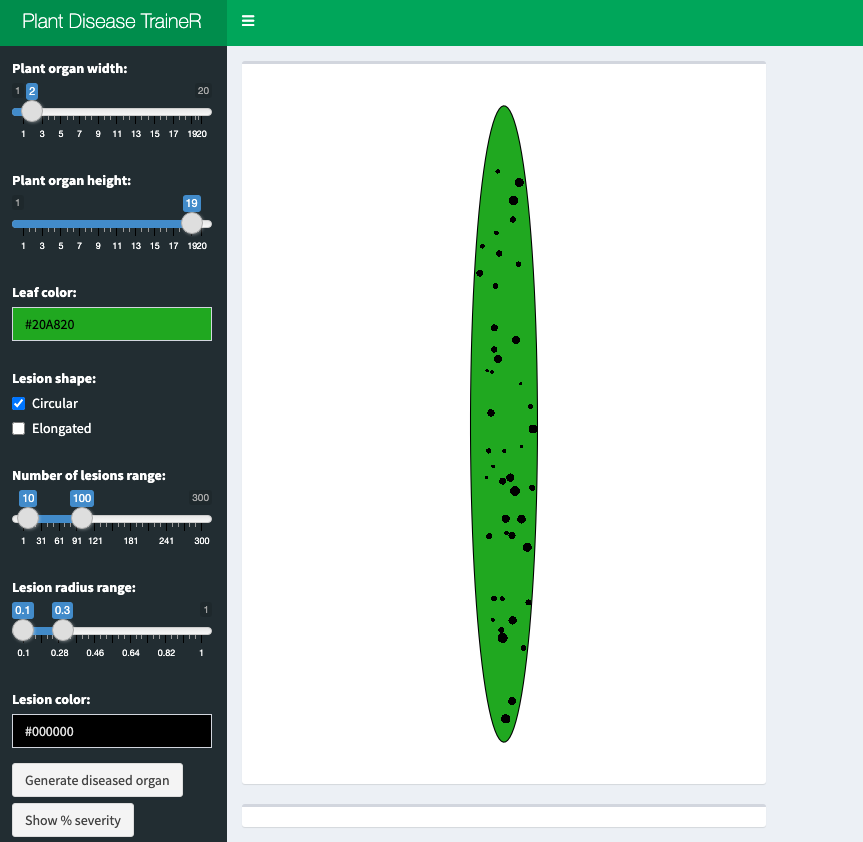
Trainer
A training tool for increasing the accuracy of visual assessments of plant disease severity (percent diseased area).
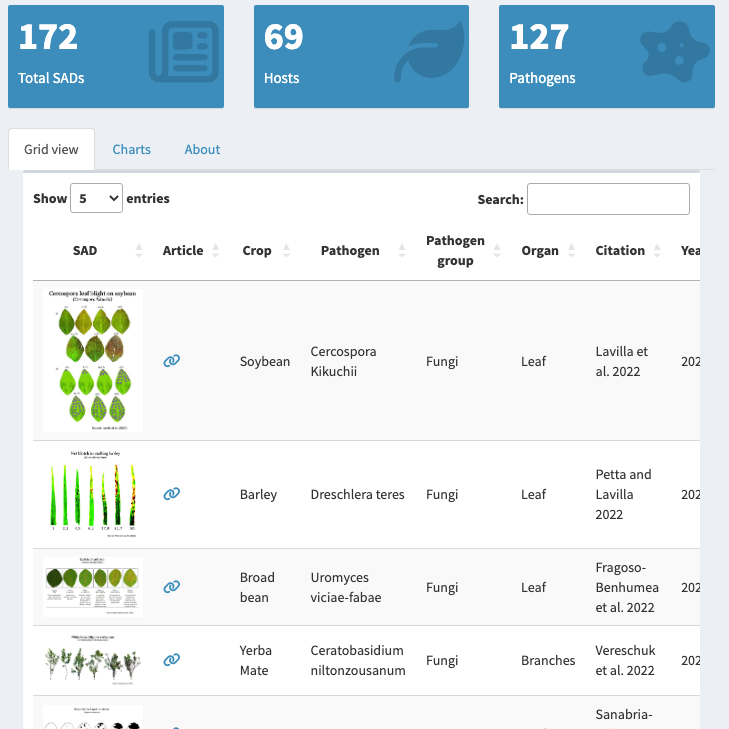
SADBank
A curated database of Standard Area Diagrams (SADs) for aiding visual assessments of disease severity.
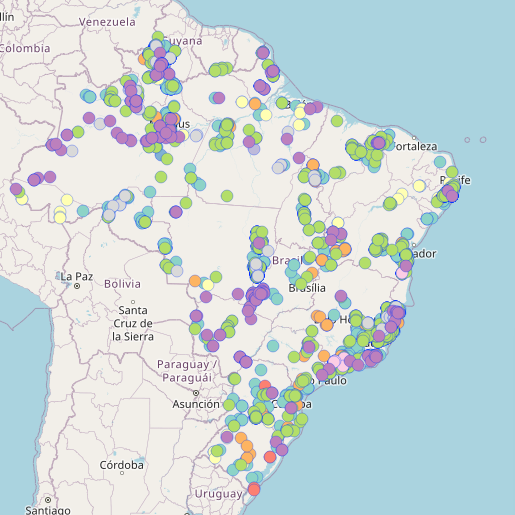
EphemBrazil
Database of distribution and basic taxonomic information on species of Ephemeroptera (Insecta) recorded in Brazil.
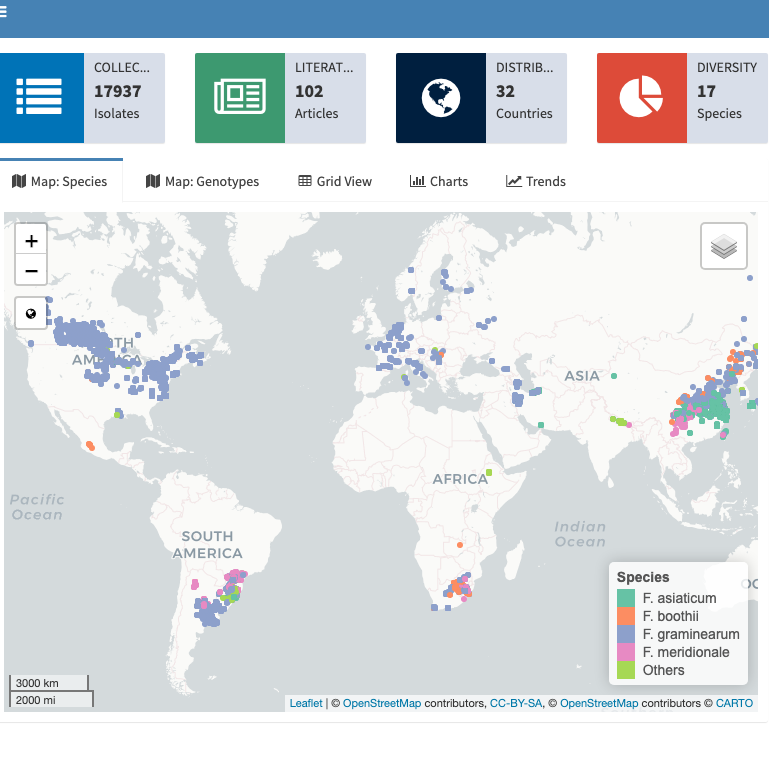
FGSC database
A georeferenced database of isolates of the Fusarium graminearum clade. Shiny app developed by Kaique S. Alves.
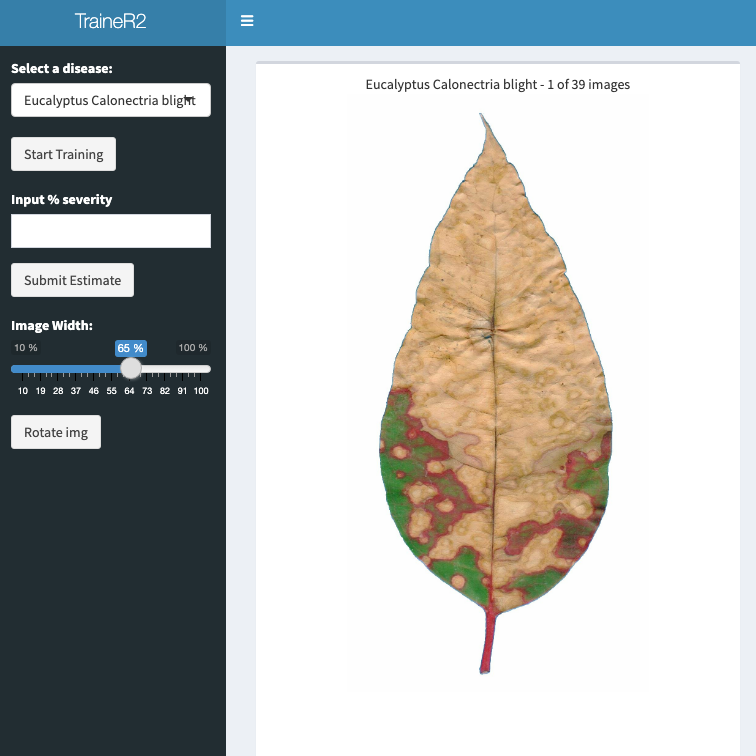
TraineR2
A training tool to increase the accuracy of severity estimates using actual photos of diseased organs.
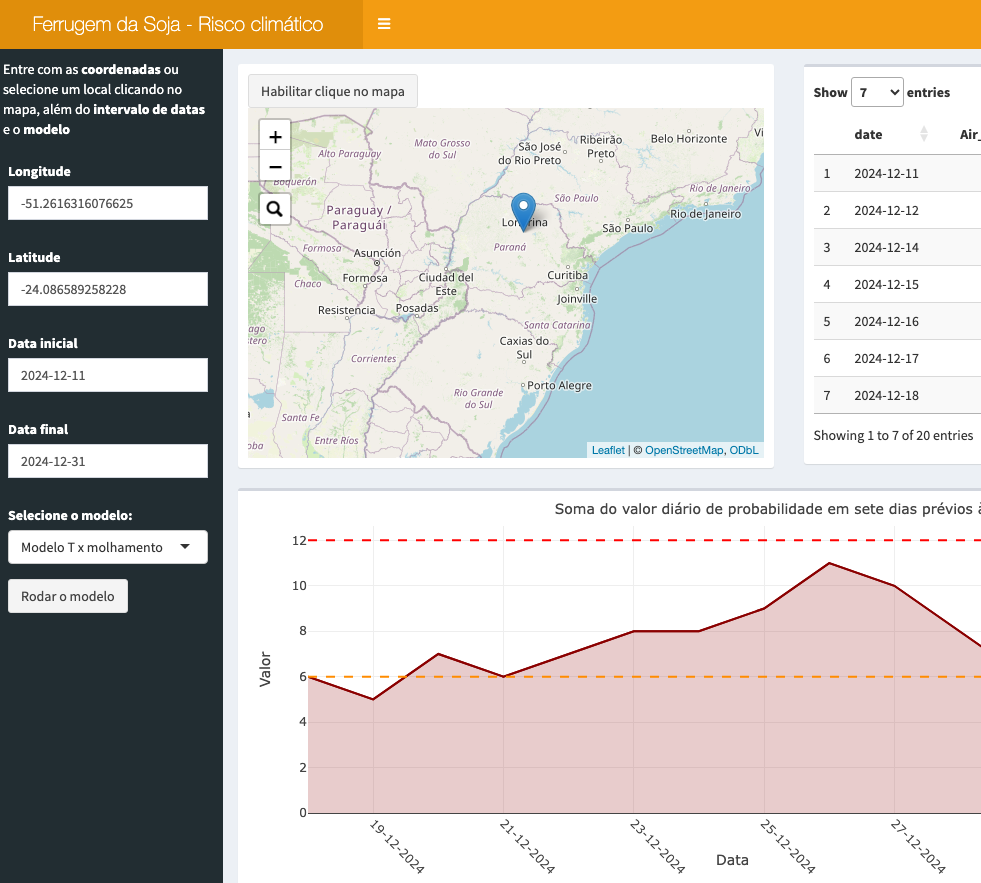
Soybean rust risk
Shiny app for a risk prediction map of soybean rust based on hourly weather conditions (in Portuguese).
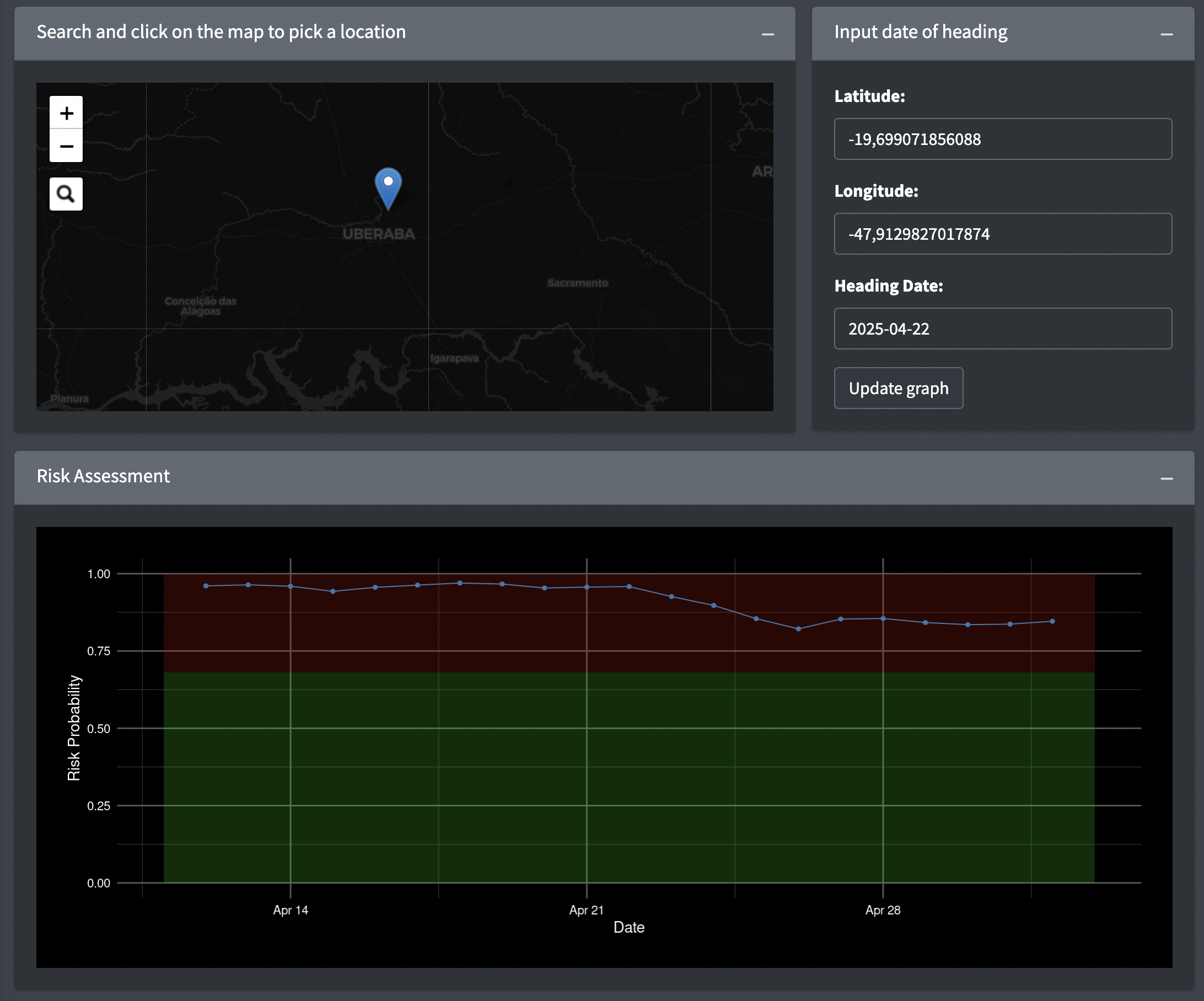
Wheat blast risk
A platform for assessing the risk of wheat blast epidemics in near real time for a specific wheat heading date and location.
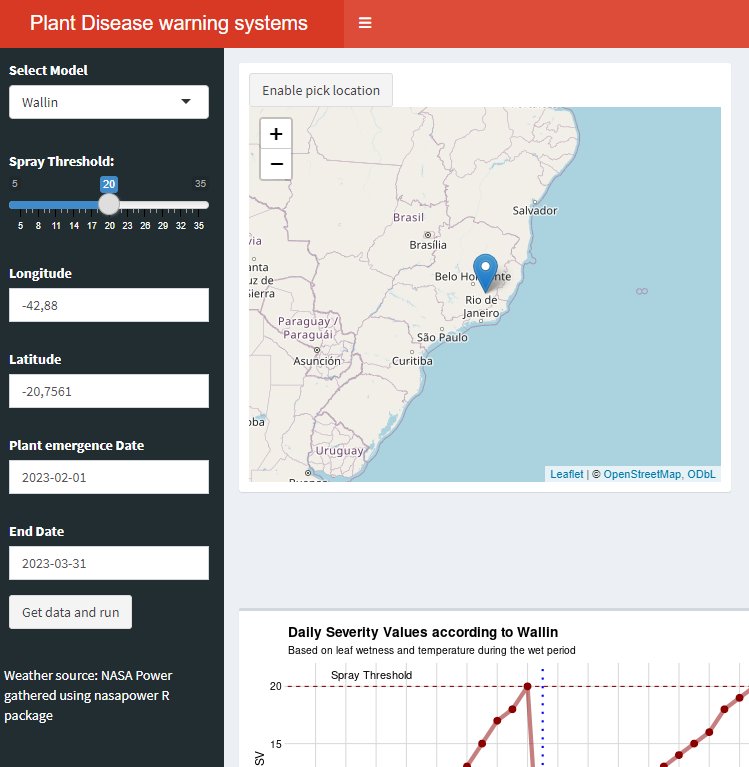
Warning systems
Calculation of severity values for Wallin and FAST warning systems for plant disease epidemics using real-time data from NASA POWER.
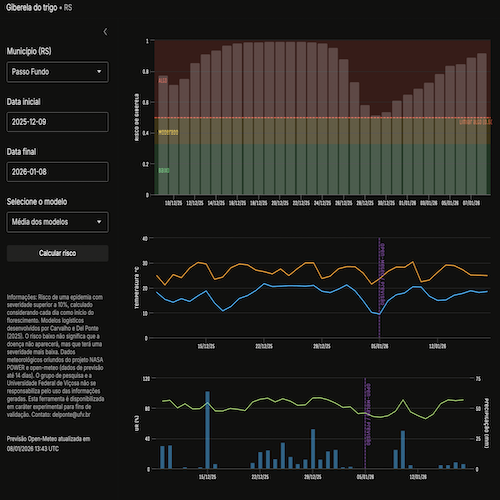
FHB risk
Dashboard for assessing the risk of Fusarium head blight epidemics for specific municipalities in Rio Grande do Sul, Brazil.
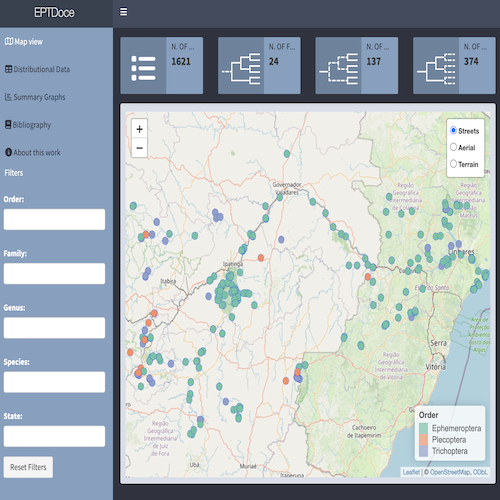
EPTDoce
Dashboard of a dynamic resource for maintaining an up-to-date and readily accessible inventory of Ephemeroptera, Plecoptera, and Trichoptera species occurring within the Rio Doce Basin.